
What a $269 Million Shipyard Award Means for Production Capacity
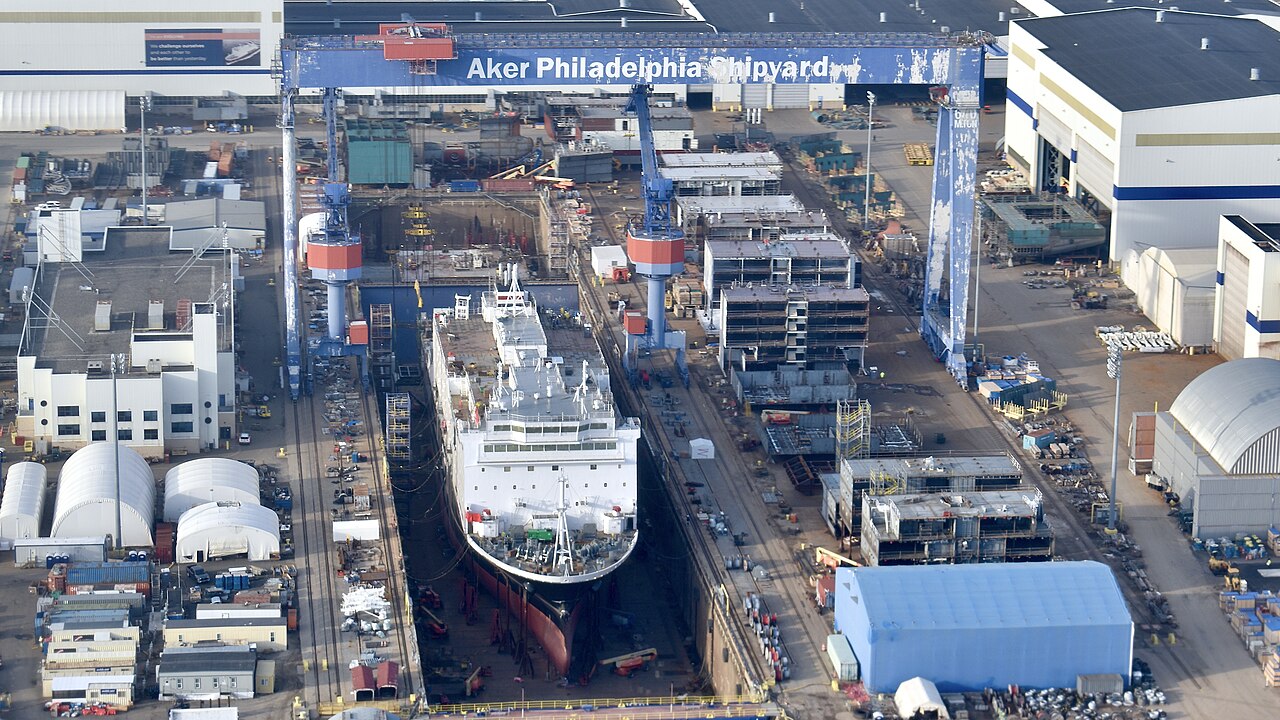
TOTE Services' $269 million award to Hanwha Defense USA covers one Landing Ship Medium (LSM) at Hanwha Philly Shipyard, with options for three additional vessels. It is welcome news for the industrial base.
As shipbuilding expands, a steady weld repair rate can mask a growing production burden. Higher output means more repairs at the same percentage, drawing on resources whose planned workload may also be increasing.
Repair hours and available capacity are different measures
The pressure appears when the same inspectors, qualified welders, or workstations must accommodate both additional production and additional repairs. The effect depends on where capacity is constrained and when the unplanned work arrives.
An allowance for repair hours in a budget does not necessarily provide a crew or an inspection slot when the repair is needed. Where resources are tightly scheduled, the delay can include waiting and resequencing as well as the repair itself. If the affected assembly is on the critical path, that delay can carry through to delivery.
This is why two jobs with similar repair rates can have very different schedule outcomes. The percentage alone does not show which resources those repairs consume or what work they displace.
Where and when repairs occur matters
Repair effort changes as construction progresses. In a multipass joint, later passes can increase the excavation needed to reach a defect. Assembly can restrict access. TWI's guidance on welding costs identifies late discovery after final assembly as a particular source of repair cost where access is difficult.
For capacity planning, repair records become more useful when they connect the defect to its production stage and distinguish hands-on repair hours from the elapsed time until the work is accepted. That helps identify whether the main burden is the repair itself, access, repeat inspection, or the downstream work waiting for release.
Reducing a recurring repair at a constrained stage can have more value for delivery than saving the same number of labor hours elsewhere. That gives earlier detection a specific operational purpose: reducing unplanned demand where it is most disruptive.
Monitoring has to improve the production result
Earlier feedback is useful when it arrives in time for the team to act and is reliable enough to justify the interruption. A production trial needs to measure detection performance alongside false alerts, additional stops, and the repair and re-inspection workload avoided. Comparisons also need to account for joint mix and inspection requirements.
The useful outcome is a reduction in total disruption under production conditions. An alert count or an overall accuracy figure cannot establish that on its own.
At Sonibel Instruments, we use acoustic sensing and AI to provide feedback during welding, with calibration and validation for defined applications. Our aim is to help teams identify potential defects earlier within their existing welding procedures and required inspection processes.
To discuss an application, contact sophia@sonibelinstruments.com.
Contact sophia@sonibelinstruments.com to learn more about Sonibel Instruments' real-time acoustic weld monitoring system.