
The US Is Rebuilding Its Shipyards. It Should Rebuild Weld Verification Too
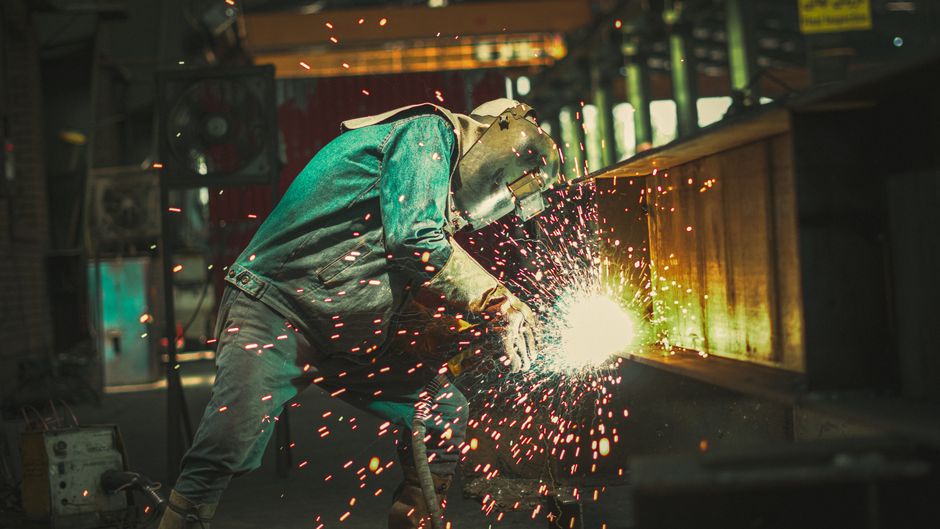
Something is shifting in American shipbuilding, and it isn't subtle. Saronic, the autonomous vessel maker, just announced it's partnering with Samsung to bring heavy industrial shipbuilding expertise back into US yards, with Saronic tapping Samsung to help revive America's ailing shipbuilding capability. Around the same time, a House tax writer floated a new incentive structure, proposing opportunity zones as a way to pull private capital back into a sector that has been shrinking for decades. Add to that the steady drumbeat of stories out of Pascagoula, Mississippi, where Amtrak service and new development are following the gravitational pull of Ingalls Shipbuilding, and the picture is unmistakable: the United States is trying to rebuild an industrial capability it let atrophy.
This is not a small ambition. Shipbuilding at scale means welding at scale, thousands of linear feet of structural and hull welds, much of it under time pressure, much of it destined for vessels that will spend decades at sea or on deterrence patrol. And here's the uncomfortable truth sitting underneath all the good news about capital and capacity: the industry rebuilding its shipyards is, in most cases, still verifying weld quality the same way it did forty years ago.
The Capacity Question Nobody's Asking Out Loud
Every headline about reviving US shipbuilding is really a headline about capacity, more steel, more yards, more welders, faster throughput. What's missing from the conversation is a parallel question: whether the ability to check weld quality can keep pace with the ability to produce more of it. When a yard scales from building a handful of hulls a year to a production tempo closer to what China Merchants Energy Shipping just took delivery of (a 175,000 cbm LNG carrier from CSSC Dalian, named and delivered in a matter of weeks), the quality control system built for slower, smaller output doesn't automatically scale with it. NDE crews don't multiply as fast as production lines do. CWI reviewers don't either. If the US is serious about matching that kind of tempo, and the opportunity zone proposal and the Saronic-Samsung partnership suggest real capital is now willing to try, then the weld verification bottleneck is going to show up long before the steel does.
Traditional QC Was Built for a Slower Industry
Here is the gap that scaling exposes: post-weld inspection, whether it's UT or RT, tells you what happened after the weld was already laid down. It doesn't tell you what happened during the pass. Porosity from a moment of shielding gas drift, lack of fusion from a travel speed hiccup, arc instability from a bad ground, these are transient events that leave a signature in the weld itself but not in any record a yard can query later. When something is flagged downstream, the investigation becomes archaeology: which welder, which pass, which day, which machine setting. In a two-hull yard, that's manageable. In a yard trying to match Dalian's delivery cadence or support an autonomous, digitally connected production line like the one described in plans for an autonomous manufacturing system spanning design, production, logistics, inspection and sea trials, it's a structural weakness. You can't digitally connect a shipbuilding process end to end if the welding station itself remains a black box.
Where Sonibel Instruments Fits Into a Scaling Yard
This is the exact gap Sonibel Instruments was built to close, and it's why the company's work fits right into the middle of the current shipbuilding conversation. Sonibel Instruments' acoustic and AI weld-defect detection system sits at the welding station itself, capturing pass-level signals in real time as welds are made, listening for the acoustic signatures of porosity, lack of fusion, lack of penetration, and slag inclusions while the weld is still happening. It does not replace NDE or CWI review, and it does not touch code compliance decisions under AWS D1.5 or similar specs. What it does is give those existing workflows something they've never had: a continuous, timestamped data layer showing what happened at the arc, pass by pass, welder by welder, joint by joint.
In a structural steel or shipbuilding deployment, that looks like this: a fabrication shop running heavy welding production retrofits a handful of welding stations with Sonibel Instruments' sensors. As welders lay passes on hull sections or structural members, the system flags acoustic anomalies in real time, before the joint is buried under the next pass or moved to final assembly. UT crews and CWIs still do their jobs, but now they're inspecting welds that have already been through a first pass of scrutiny instead of starting from zero, spending their limited hours on the joints and passes that have already cleared a Sonibel pre-check. The record itself becomes part of the deliverable, a pass-level history that didn't exist before and that a yard scaling toward carrier-group replenishment ships or Jones Act tonage can actually produce on demand.
The Industrial Policy Case for In-Process Data
Every dollar Congress considers for opportunity zones, every partnership like Saronic and Samsung's, every new facility opening near a place like Ascension Parish, Louisiana, is a bet that American fabrication can scale back up. That bet only pays off if quality scales with it. An in-process weld data layer isn't a nice-to-have bolted onto that ambition, it's the piece that lets tempo and traceability grow together instead of trading off against each other. The yards that build this layer in now, while the capital is flowing and the lines are being laid out, will be the ones that can prove, weld by weld, that speed didn't cost them quality. That's the difference between rebuilding a shipyard and rebuilding a shipbuilding industry that can be trusted at scale.
Contact sophia@sonibelinstruments.com to learn more about Sonibel Instruments' real-time acoustic weld monitoring system.