
The Nuclear Restart Boom Is Colliding With a Welding Capacity Problem
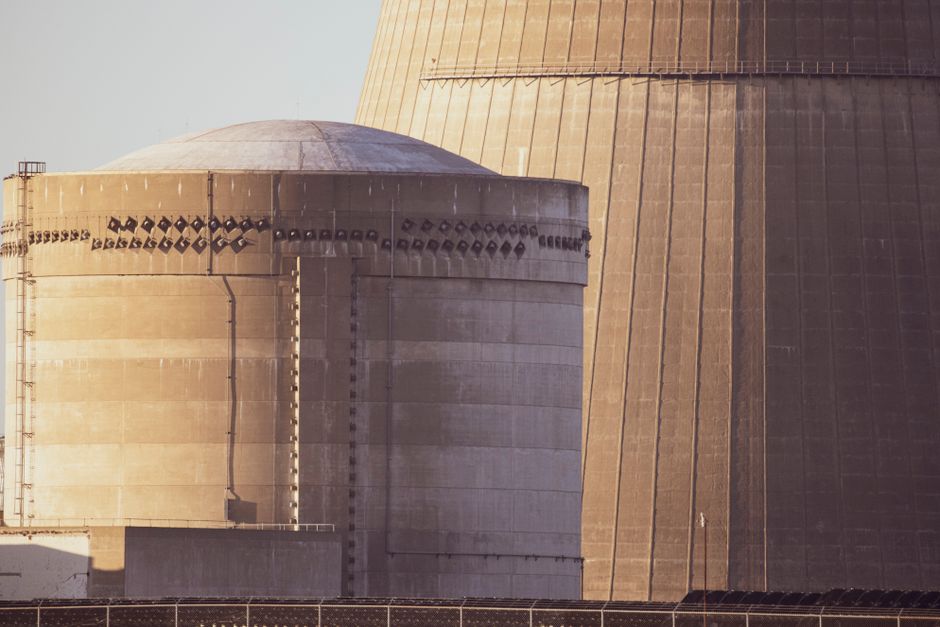
Nuclear power is having a moment it has not had in decades. Utilities are racing to bring shuttered reactors back online, extend the life of aging fleets, and in some cases build new capacity from scratch, all driven by a data center power demand curve that shows no sign of flattening. Holtec International's work to restart the Palisades plant in Michigan, long treated as a bellwether for the broader industry, has kept nuclear fabrication and heavy component supply chains in the headlines through much of this year. The pressure vessel and piping fabricators who feed that supply chain are suddenly being asked to do more work, faster, without loosening the code requirements that make nuclear welding some of the most scrutinized in the world.
That is the tension nobody outside the fabrication shop floor sees clearly enough. A restart or a life extension is not just a regulatory and engineering milestone. It is a wave of new pressure vessel, piping, and containment welding work landing on a supplier base that has not meaningfully expanded in a generation. Owners want schedule certainty. Regulators want documentation. Welders want workable procedures. Those three demands do not always pull in the same direction, and the gap between them shows up first in quality assurance.
Why More Welding Volume Exposes an Old Blind Spot
Traditional weld QA in nuclear and pressure vessel work is built around inspection after the fact. Ultrasonic testing, radiography, and CWI visual review all confirm whether a completed weld meets code, whether that is ASME Section IX or the structural and piping standards that overlap with it. That system works, and it is not going away. But it was designed for a world where volume was moderate and schedules had slack in them. It says almost nothing about what happened during the arc: which pass ran hot, where porosity started to build, whether an inconsistency was caught in real time or a one-off blip that self-corrected.
When restart and new-build volume climbs, as it is now across the nuclear fabrication base, that blind spot gets more expensive. Every added shift, every added welder, every new procedure qualification record widens the population of welds waiting on downstream inspection to tell a story that was actually written pass by pass, in real time, and then lost. Rework discovered at final UT is rework that could have been caught, or avoided, when the defect was still forming.
What an In-Process Data Layer Actually Buys a Fabricator
This is the specific gap Sonibel Instruments was built to close. Sonibel Instruments' system sits at the welding station and listens to the arc as the weld is being made, using acoustic sensing paired with AI to flag porosity, lack of fusion, incomplete penetration, and slag inclusions at the pass level, while the weld is still open. It does not replace UT, NDE, or CWI sign-off, and it does not touch code compliance. What it does is give those existing steps a record to work from instead of a blank page: a pass-level history of exactly how a weld was produced, tied to the procedure, the joint, and the date and time. Sonibel Instruments is currently in pilot deployments with the Royal Canadian Navy, alongside several major fabricators in the United States, putting this approach to work across both defense and industrial welding environments.
For a pressure vessel fabricator scaling up to meet nuclear restart demand, that record changes how QA time gets spent. Instead of treating every joint as equally uncertain until UT clears it, inspectors can move more quickly through the welds that Sonibel Instruments' real-time defect detection and the welder's in-process judgment have already cleared, double-checking them against a documented pass-level record instead of starting from zero. The goal is not to replace ultrasonic testing, it is to make UT go faster, backed by a documented process trail.
Picture a mid-sized fabricator supplying vessel components into a restart project, running FCAW on thick-section carbon steel across multiple shifts with a mix of experienced and newer welders. Acoustic monitoring at each station builds a pass-level record as the work happens. When a weld shows early signs of arc instability on an inner pass, the system flags it before the joint is closed out, giving the welder a chance to address it in-process rather than waiting for UT results, then grinding through multiple passes, rewelding, and waiting again for reinspection. Over a project, that record also becomes documentation the owner and the regulator can review, showing not just that a weld passed, but how it was made.
Where This Is Headed as Nuclear Fabrication Scales
The nuclear sector's restart and expansion wave, alongside similar demand pressure in pressure vessel work tied to hydrogen and industrial decarbonization, is not a short cycle. It is a multi-year build-out that will keep asking fabricators to do more qualified welding with the same inspection resources they have today. Owners and regulators are going to keep wanting proof, and after-the-fact inspection alone cannot scale to meet that appetite without slowing schedules.
An in-process data layer is a direct answer to that math. It does not ask the industry to trust less in UT and CWI review, it asks the industry to feed those reviews better information, generated the moment the arc strikes rather than reconstructed after the joint is cold. As restart projects like Palisades move from headline to hardware, the fabricators who can show a documented, pass-level record of how their welds were made, not just that they eventually passed, are the ones best positioned to keep pace.
Contact sophia@sonibelinstruments.com to learn more about Sonibel Instruments' real-time acoustic weld monitoring system.