
What the Key Bridge Rebuild Reveals About the Future of Weld Quality
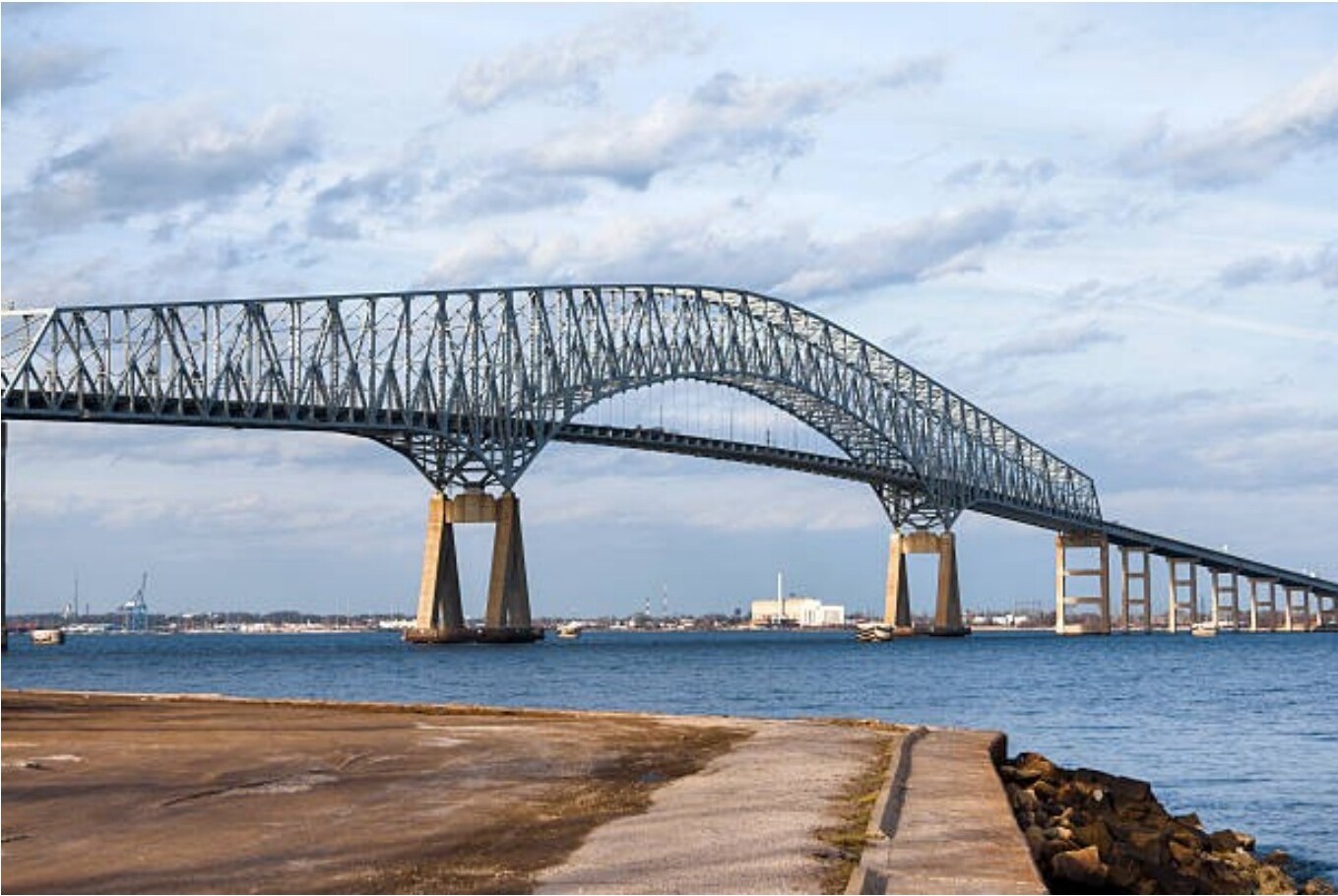
America's bridge rebuild will be won or lost on the fabrication floor. The Bipartisan Infrastructure Law earmarked $40 billion over five years for bridge programs. Replacement projects are accelerating. Structural steel fabricators are being asked to deliver more fracture-critical work under tighter timelines and heavier QA requirements than at any point in recent memory.
The challenge is not just building more steel. It is proving, at production speed, that every critical weld was made right.
In April 2026, the Maryland Transportation Authority announced it would not retain Kiewit Infrastructure for Phase 2 construction after the parties could not resolve cost estimates. Design is expected to finalize in June 2026, with fabrication procurement following closely behind. The reported issue was cost, not quality. But the lesson for the next phase is clear: the bar is rising on cost, schedule, and quality at the same time.
What Fracture-Critical Bridge Fabrication Demands
The Key Bridge replacement will involve fracture-critical structural steel work across its approach spans and structural connections, the classification that places the highest QA burden in structural steel fabrication. Bridge work of this kind is governed by AWS D1.5 and project-specific requirements. For the most critical welds, ultrasonic testing is not a sampling exercise. It is a full-coverage requirement that turns inspection and documentation into a production constraint.
Material traceability, WPS compliance, and NDE records travel with every member. For a project of this scale and visibility, documentation requirements can approach the rigor seen in other high-consequence fabrication environments.
On a project this visible, quality failures do not stay contained inside the facility. They create schedule risk, owner scrutiny, reinspection cycles, and documentation burdens that can follow a fabricator long after a single joint is repaired.
The Missing Data Layer in Weld Quality
Traditional QA tells a fabricator whether a weld passed after the work is already done. It does not create a complete record of what happened during the weld itself.
For fracture-critical bridge work, that gap matters. A finished UT report is essential, but it is still downstream evidence. It does not show arc behavior, pass-level instability, or the moment a defect condition first appeared. Inspectors work from what the weld looks like after it has cooled, not from what the arc was doing while it was running.
As bridge fabrication becomes more complex and more scrutinized, the next step is not replacing NDE. It is giving NDE better data before the inspection begins. The future of weld quality is not more paperwork after the weld. It is better data during the weld. AI in fabrication will only be as useful as the production data it can learn from. For welding, that data has to come from the arc itself.
Real-Time Weld Monitoring: Catching Defects at the Source
Sonibel Instruments is building that in-process weld data layer for FCAW environments, a common process in heavy structural steel fabrication. Its acoustic monitoring system sits at the welding station and captures pass-level signals as the weld is being made, giving fabricators a live record of conditions associated with porosity, lack of fusion, arc instability, and other defect risks.
The goal is not to replace UT, CWI review, or code compliance. The goal is to make those workflows more targeted, better documented, and less reactive. NDE teams still perform the required coverage, but they work from a pass-by-pass acoustic record that shows where risk emerged, where corrective action was taken, and where the weld remained stable.
"On a project like the Key Bridge, QA has to work at production rate. Real-time monitoring at the arc gives fabricators a way to find risk earlier, document it automatically, and keep inspection from becoming a bottleneck."
— George Hollo, Co-Founder and CTO, Sonibel Instruments
What This Looks Like on the Fabrication Floor
Sonibel Instruments' early production deployment was with a structural steel fabricator, FCAW-heavy, running the same core processes major bridge fabricators rely on.
The fabricator didn't replace their QA program. They added Sonibel's acoustic monitoring system at the welding station and kept their existing UT workflow intact. What changed was how the certified welding inspector's time was allocated on the floor. Instead of applying uniform coverage across every joint, inspectors worked from a pass-by-pass acoustic record that told them where to look, and where the in-process signals stayed within expected ranges.
The result was not a different QA standard. It was a better operating picture: inspectors had earlier signals, supervisors had a clearer record, and the fabricator had more context before downstream inspection.
For a fabricator operating under the documentation requirements of a federally scrutinized project, that record matters beyond the inspection floor. Every flagged pass, every stable pass, every corrective action taken at the arc, captured, time-stamped, and tied to the joint. Not assembled after the fact. Generated as a byproduct of the weld itself.
Where Critical Fabrication Goes Next
The Key Bridge rebuild is one project. The larger shift is bigger. Critical fabrication is moving toward higher scrutiny, tighter schedules, and more data-driven quality expectations. Roughly 42,000 bridges across the country remain structurally deficient. By early 2025, $33.5 billion in highway and bridge contracts had been awarded, an 11.7% increase over the prior year.
Fabricators that can generate reliable, first-order weld data at the source will not just inspect finished work more efficiently. They will build a new operating layer for quality, productivity, and trust.
Sonibel Instruments is building that layer for welders, inspectors, and fabricators delivering the infrastructure America cannot afford to get wrong.
Contact sophia@sonibelinstruments.com to learn more about Sonibel Instruments' real-time acoustic weld monitoring system.